Posts

Showing posts with the label Forensic

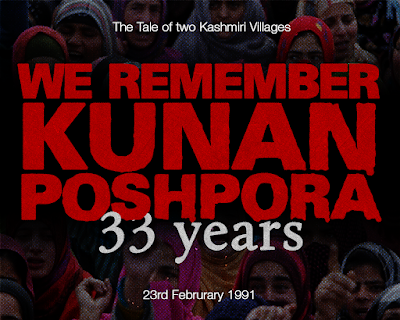
KUNAN POSHPORA CASE - 1991

Image
  By Maahi Raina, Pooja lakshmi Lini, Prajwal Biswas, Khedkar Lisha Snehal and Sneha Thakkar. (Interns at C.A.S.E. 23) Click to read

Atul Subhash Case

Image
  By: Mandadi Nikhit, Sravani, Sristi Dutta, Ritika kumari and Rohan Singrore. (Interns at C.A.S.E. 23) Click to read

Forensic Geology: Unveiling Crime Through Earth’s Clues

Image
  By Alina prem (Garden city university, Msc Forensic science graduate, Bengaluru). Forensic geology is the important interdisciplinary science that incorporates the geological sciences into criminal investigations. Materials such as soil, rocks, and minerals, when analyzed by forensic geologists, provide critical evidence necessary to help in associating suspects with crime scenes, solutions of environmental crimes, and even in the identification of victims. Applications in Criminal Investigations: Forensic geology makes crucial contributions to criminal cases involving homicide, burglary, and environmental offenses. For instance, soil examination perhaps may indicate special geologic markers that would serve to positively identify a suspect as having been at a crime scene. This is based upon the "Locard Exchange Principle" that simply states that whenever two objects come into contact, materials will be exchanged between them. It has been used in high-profile cases, such ...
POSTMORTEM CHANGES: A THANATOLOGICAL PERSPECTIVE.

Image
 Author: AISWARYA S, BSc. (Hons) FORENSIC SCIENCE Yenepoya University, Mangalore, Karnataka. Thanatology is a branch of science that deals with the scientific study of death. "The basic concept is that death is the irreversible loss of the capacity for consciousness and capacity to breathe". A body undergoes complex changes after death. Postmortem changes depend on numerous factors such as temperature, season, geographical location at which the body is found etc. Postmortem changes are being described under the following headings: 1. IMMEDIATE CHANGES: which result in irreversible cessation of functions of the brain, heart, and lungs. Muscles of the body become flaccid, and corneal reflexes are abolished. 2. EARLY CHANGES: which take place between the first 12 to 24 hours. They comprise: Changes in the skin: Elasticity disappears quickly after death. Skin that was translucent in life becomes pale. Changes in the eye: The cornea loses its luster with the passage of time. It be...

The Killer Nurse: Aino Nykopp

Image
  The Killer Nurse: Aino Nykopp Author: Akanchha Singh( Volunteer at C.A.S.E. 23 Official). Click to read

Methods of Fingerprint identification and extraction.

Image
  Methods of fingerprint identification and extraction. Authors: Niranjan, Mohit, Ojasvi, Prajwal, Saanvi and Nilanjana. Click to read

Scientific Evaluation of Forensic Biology & Serology Technology in the 21st Century.

Image
  Scientific Evaluation of Forensic Biology & Serology Technology in the 21st Century. By GOWTHAM T - Volunteer of C.A.S.E. 23 Official. The document explores the rapid advancements in forensic biology and serology over the past two decades, emphasizing their growing importance in solving crimes through the examination of biological evidence. Evolution and Impact Forensic biology analyzes biological materials including blood, saliva, and DNA to tie suspects to crime scenes. Serology, on the other hand, examines body fluids to identify antigens and antibodies. Traditional procedures such as blood typing and serological testing have developed over time into very accurate DNA profiling approaches. DNA profiling, particularly Polymerase Chain Reaction (PCR) amplification and Short Tandem Repeat (STR) analysis, has transformed criminal investigation by delivering precise identifications even from damaged or limited materials.                 ...

RICKY MCGINN EXECUTED FOR STEPHANIE FLANARY MURDER

Image
 RICKY MCGINN EXECUTED FOR STEPHANIE FLANARY MURDER BY- MOHINI CHAUHAN (Volunteer of C.A.S.E. 23 Official) Click to read

INTRODUCTION TO DERMATOGLYPHICS

Image
  INTRODUCTION TO DERMATOGLYPHICS By SARADENTHU KURUP, SANSKRITI RANI AND STENI GRACE (Volunteers at C.A.S.E.23 Official) Click to read

Wound Ballistics: Understanding the Impact of Projectiles on Living Tissue.

Image
  Wound Ballistics : Understanding the Impact of Projectiles on Living Tissue. By Gopi Reddy Kurri (Volunteer at C.A.S.E. 23 OFFICIAL) Introduction : Wound ballistics is a specialized subfield of ballistics that studies the effects of projectiles on living tissue. This area of study is crucial for understanding how different types of ammunition can cause injuries, which is essential for forensic investigations, medical treatment, and legal proceedings. By analyzing the behavior of bullets upon impact, forensic experts can provide valuable insights into the nature and severity of injuries sustained by victims. The Basics of Wound Ballistics: Definition and Scope: Wound ballistics focuses on the interaction between a projectile and biological tissues. It examines how bullets penetrate, transfer energy, and create damage within the body. This field encompasses various factors, including the type of projectile, its velocity, and the distance from which it was fired.   Key Concepts...

Priyadarshini Mattoo MURDER CASE

Image
  Priyadarshini Mattoo Murder Case Author: Goka Ruchita (Volunteer at C.A.S.E. 23 OFFICIAL) Click to read

Firearms and Neuroscience: A Glimpse into the Shooter's Mind

Image
  Firearms and Neuroscience: A Glimpse into the Shooter's Mind. - By Saanvi Soni (Volunteer at C.A.S.E. 23 OFFICIAL) Firearm use and diagnostic methods intersect in terms of the investigation of psychological and neuropsychological aspects underlying the shooting behavior. Evolving this question within the scope of the shooter's mind, justice has to understand to what extent stress, adrenaline, and cognitive activities determine the making of decisions and performance in functional actions under pressure. Due to the development of neuroscience, it has been to some extent conceptualized how an individual respond to threats, evaluates risks, and how training can alter performance. Such integrated methods clarify not only how shooting is executed, but also how feelings, thoughts and behaviors interact, contributing to the understanding of single acts with firearms more in depth as well as their uses in society. Interestingly, not everybody who undergoes such triggers becomes a sh...

Wayanad landslide case study

Image
 Wayanad land slides  By Nilanjana Roy ( Volunteer at C.A.S.E. 23 OFFICIAL) Click to read

NETWORK FORENSICS

Image
  NETWORK FORENSICS  By Vanshita GARG, YASH SHARMA AND YASH Sharma (Volunteers C.A.S.E.23 Official) Click to read

Postmortem Redistribution

Image
    Postmortem Redistribution Author: Vaishali Rajoriya, Masters of Forensic Science NFSU, Bhopal. A critical concept in forensic toxicology, which refers to changes in the concentration of substances in the body following death, is postmortem redistribution. This phenomenon can significantly impact the interpretation of toxicological analyses and forensic investigations. Understanding the mechanisms and implications of postmortem redistribution is essential for accurate death investigations and legal outcomes. Mechanisms of Redistribution Postmortem redistribution occurs due to the cessation of circulatory and metabolic processes, which leads to the redistribution of substances within the body. After death, the lack of blood circulation causes the concentration of drugs and toxins in various tissues to become uneven. Several factors contribute to this redistribution: 1. Diffusion : After death, the equilibrium between blood and tissues starts to shift. Substances that were pr...

Soumya Vishwanathan Murder case

Image
  CASE STUDY: Soumya Vishwanathan Murder case Author: Monika Thakur (Volunteer at C.A.S.E. 23 OFFICIAL) Click to read  

HOUSTON COLD CASE MURDER OF DIANA MAXWELL

Image
  HOUSTON COLD CASE MURDER OF DIANA MAXWELL By Anshita Bathre Volunteer of C.A.S.E.23 Official Click to  r ead  

Forensic Odontology: DATABASES AND SOFTWARES USED FOR MASS DISASTER VICTIMS IDENTIFICATION

Image
  Forensic Odontology: DATABASES AND SOFTWARES USED FOR MASS DISASTER VICTIMS IDENTIFICATION. By Dip Sutradhar, Blessy Susan A(Volunteers at C.A.S.E. 23 OFFICIAL) Click to read  

Advantages of nanodrop over traditional spectrophotometr

Image
 Advantages of nanodrop over traditional spectrophotometry. Author: Akash Saha, Student, NFSU-Tripura Campus. 1. Introduction Brief overview of spectrophotometry: Spectrophotometry refers to the process of measuring how materials engage with light, including their reflection, transmission, scattering, absorption, and light emission. This technique requires accurate definitions of various quantities to ensure precise measurements and reliable interpretations of optical characteristics. Introduction to Nanodrop technology: Nanodrop spectrophotometers use microvolume samples (around 2 μL) and fiber optic technology to measure nucleic acids, proteins, and biomolecules, minimizing sample waste compared to traditional methods. 2. Traditional Spectrophotometry: Key Features Basic principles of traditional spectrophotometry: A spectrophotometer operates on the principle that a compound absorbs or transmits light at specific wavelengths. It obeys Beer's Law.  Working of Spectrophotom...

Tandoor Murder case.

Image
Tandoor Murder case. Author: Naveen Kumar T (Volunteer at C.A.S.E. 23 Official)   Click to read.