Posts

Showing posts with the label case

The Birmingham Church – Cauldron of civil unrest.

Image
  By Manya Burman, Anjali and Nithin. Click to read

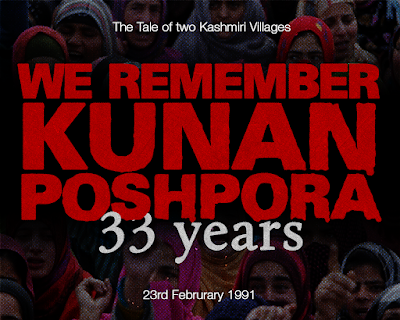
KUNAN POSHPORA CASE - 1991

Image
  By Maahi Raina, Pooja lakshmi Lini, Prajwal Biswas, Khedkar Lisha Snehal and Sneha Thakkar. (Interns at C.A.S.E. 23) Click to read

Forensic Geology: Unveiling Crime Through Earth’s Clues

Image
  By Alina prem (Garden city university, Msc Forensic science graduate, Bengaluru). Forensic geology is the important interdisciplinary science that incorporates the geological sciences into criminal investigations. Materials such as soil, rocks, and minerals, when analyzed by forensic geologists, provide critical evidence necessary to help in associating suspects with crime scenes, solutions of environmental crimes, and even in the identification of victims. Applications in Criminal Investigations: Forensic geology makes crucial contributions to criminal cases involving homicide, burglary, and environmental offenses. For instance, soil examination perhaps may indicate special geologic markers that would serve to positively identify a suspect as having been at a crime scene. This is based upon the "Locard Exchange Principle" that simply states that whenever two objects come into contact, materials will be exchanged between them. It has been used in high-profile cases, such ...

Jiah Khan's death.

Image
  By Arushi Mathur, Sristi Dutta and Surya Gayathri (Interns at C.A.S.E. 23). Click to read

Neeraj Grover case study

Image
  By Anuska Panda, Goka Ruchitha  and Sakshi Barpete (Interns at C.A.S.E. 23) Click to read

Max Sica Case study.

Image
  Max Sica Case Study  Author: Anusha Suresh Kumar (Volunteer at C.A.S.E. 23 OFFICIAL) Click to read

The Killer Nurse: Aino Nykopp

Image
  The Killer Nurse: Aino Nykopp Author: Akanchha Singh( Volunteer at C.A.S.E. 23 Official). Click to read

Postmortem Redistribution

Image
    Postmortem Redistribution Author: Vaishali Rajoriya, Masters of Forensic Science NFSU, Bhopal. A critical concept in forensic toxicology, which refers to changes in the concentration of substances in the body following death, is postmortem redistribution. This phenomenon can significantly impact the interpretation of toxicological analyses and forensic investigations. Understanding the mechanisms and implications of postmortem redistribution is essential for accurate death investigations and legal outcomes. Mechanisms of Redistribution Postmortem redistribution occurs due to the cessation of circulatory and metabolic processes, which leads to the redistribution of substances within the body. After death, the lack of blood circulation causes the concentration of drugs and toxins in various tissues to become uneven. Several factors contribute to this redistribution: 1. Diffusion : After death, the equilibrium between blood and tissues starts to shift. Substances that were pr...

Advantages of nanodrop over traditional spectrophotometr

Image
 Advantages of nanodrop over traditional spectrophotometry. Author: Akash Saha, Student, NFSU-Tripura Campus. 1. Introduction Brief overview of spectrophotometry: Spectrophotometry refers to the process of measuring how materials engage with light, including their reflection, transmission, scattering, absorption, and light emission. This technique requires accurate definitions of various quantities to ensure precise measurements and reliable interpretations of optical characteristics. Introduction to Nanodrop technology: Nanodrop spectrophotometers use microvolume samples (around 2 μL) and fiber optic technology to measure nucleic acids, proteins, and biomolecules, minimizing sample waste compared to traditional methods. 2. Traditional Spectrophotometry: Key Features Basic principles of traditional spectrophotometry: A spectrophotometer operates on the principle that a compound absorbs or transmits light at specific wavelengths. It obeys Beer's Law.  Working of Spectrophotom...

Expert Witness, Modus Operandi & Portrait Parle

Image
Expert Witness, Modus Operandi & Portrait Parle. Author:  Dr. Satwik Chatterjee [BDS, FFOMJ, DPSYCH, PGDMFMT, CCFS, CCCSI] [Professional Lifetime Member at South Asian Society of Criminology & Victimology (SASCV) Ex- Member of Admin Wing & Technical Head at (C.A.S.E. 23 OFFICIAL) Received “Honorary Doctorate Award” from (NITI Aayog, Govt. of India on 23rd February, 2024) “World Book Record” Holder on (31st May,2024) Received “International Brooklyn Award 2024 from (Art Society of London on 1st July, 2024) Internationally certified ACLS,BLS,PALS,CPR & AED Provider from American Medical Association (AMA), American Dental Association (ADA), Post Graduate Institute of Medical sciences (PIMS)] (A). Expert Witness:- An Expert Witness is a person who possesses specialized knowledge, skills, or, experience in a particular field that goes beyond the understanding of the average person. They are called upon to provide their expert opinion in legal proceedings, typically in co...

Crime Scene Investigation- Techniques, Collection and Preservation of Evidence

Image
Crime Scene Investigation- Techniques, Collection and Preservation of Evidence. Author: Mounashree AM, Naveen Kumar, Vaishali Rajoriya.  Click to read: